Revues scientifiques académiques
Du cercle parfait de la solitude – Charles Juliet en poésie
DOI :
https://doi.org/10.26881/erta.2025.42.04Mots-clés :
solitude, poésie, genèse, voixRésumé
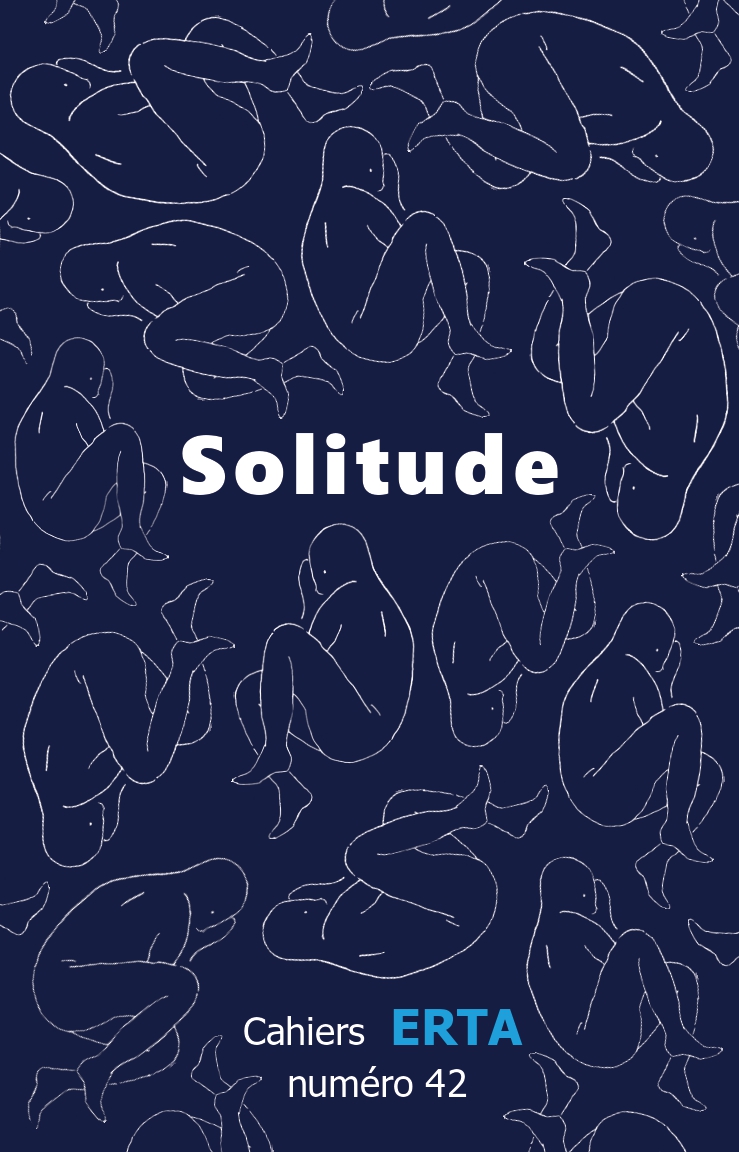
Exploring solitude in Charles Juliet’s work means apprehending an entire poetic and spiritual journey. His poems, less studied than his Journal, form the corpus of our study. As a condensed form of writing and thinking, they express the aesthetics of simplicity and the demanding nature of truth he treasures. To explore this solitude, we must look beyond the mythical figure of the “solitary walker” and grasp the genesis of the poet in order to understand the gradual transmutation of solitude throughout his journey. Solitude is, first of all, original exile and the ordeal of one who must learn how to speak, as well as the condition for self-encounter and creation. Dialectical in nature, it requires presence. The poet’s work draws on readings, diverse voices, and a fraternal need for sharing. Juliet thus appears as a spokesperson, lending his words to those who cannot yet find their own, speaking from one solitude to another, and inviting consent—so that each may discover their own voice.
Téléchargements
Références
Barry R., Charles Juliet en son parcours : rencontre avec Rodolphe Barry, Paris, Les Flohic, 2001.
Bobin C., Correspondance personnelle, Lettres à Charles Juliet, 1985.
Juliet C., Ce pays du silence ; précédé de, Trop ardente et L’inexorable, Paris, P.O.L, 1992.
Juliet C., Affûts, Paris, P.O.L, 1995.
Juliet C., À voix basse, Paris, P.O.L, 1997.
Juliet C., « Pourquoi écrire ? », [dans :] Échanges : entretiens, textes, études, Vénissieux, Éd. Paroles d’Aube, 1997.
Juliet C., Fouilles : suivi de L’œil se scrute. Approches. Une lointaine lueur, Paris, P.O.L, 1998.
Juliet C., L’Opulence de la nuit, Paris, P.O.L, 2006.
Lévy G., « Écritures de la solitude : Charles Juliet », [dans :] Topique 64, Solitudes, Le Bouscat, l’Esprit du temps, 1998.
Siméon J.-P., Charles Juliet : la conquête dans l’obscur, Paris, J.-M. Place, 2003.