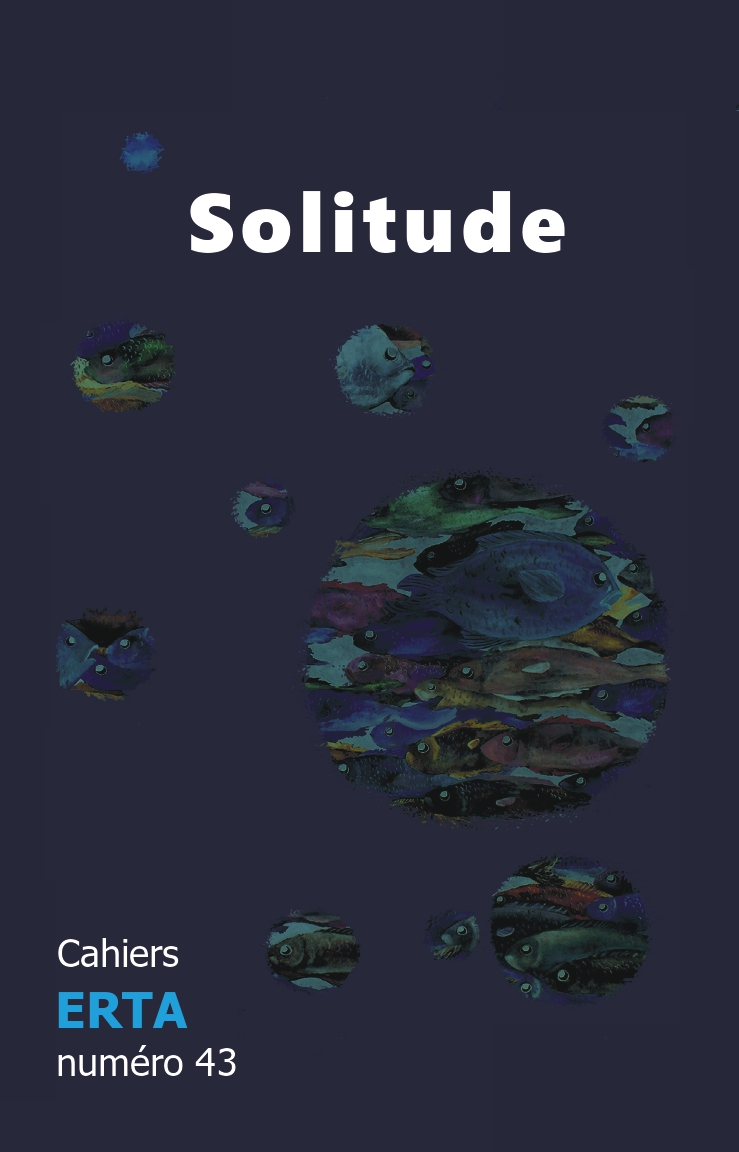
Revues scientifiques académiques
Un vibrant plaidoyer pour un retour à l’amour et à la compassion dans l’oeuvre de Michel Houellebecq
DOI :
https://doi.org/10.26881/erta.2025.43.03Mots-clés :
machismo, alienation, social factors, end of ironic relativism, another paradigmRésumé
In the work of French writer Michel Houellebecq, contemporary existence is characterized by a deep and pervasive loneliness. This condition arises from the crisis of masculinity, the disappearance of a transcendent or spiritual framework, and the alienating mechanisms of late-capitalist consumer culture. Rather than offering a purely literary diagnosis, Houellebecq develops his critique through a hybrid methodology that combines sociological observation, philosophical reflection, and narrative experimentation. His novels function as laboratories in which the tensions of modernity are staged and dissected, often through provocative exaggeration and irony. Yet Houellebecq’s outlook is not entirely bleak: he also points to the possibility of a paradigm shift in which authenticity, compassion, and love regain primacy. In this way, his work situates itself at the intersection of literature and cultural theory, articulating both a critique of contemporary subjectivity and an appeal to revalorize enduring human values.
Téléchargements
Références
Bataille G., La littérature et le mal, Paris, Gallimard, 1979.
Bellanger A., Houellebecq, écrivain romantique, Paris, Éditions Léo Scheer, 2008.
Betty L., Without God. Michel Houellebecq and materialist horror, The Pennsilvanya State University Press, 2016.
Bowd G., «The Anti-Sartre? Michel Houellebecq and Politics», [dans:] Australian Journal of French Studies, 2019, vol. 56, n° 1.
Buvik P., «de Baudrillard à Houellebecq», [dans:] S. van Wesemael et B. Viard, L’ Unité de l’ oeuvre de Michel Houellebecq, Paris, Classiques Garnier, 2014.
Clément, M.L.C, «Masculin versus féminin chez Michel Houellebecq», [dans:] L’Esprit créateur, 2004, vol. 44, n° 3.
Dupuy V., «Une certaine ingénuité. Michel Houellebecq», [dans:] S. van Wesemael et B. Viard, L’Unité de l’oeuvre de Michel Houellebecq, Paris, Classiques Garnier, 2014.
Foucault M., «Préface à la transgression», [dans:] Critique, 1963, n° 195-196.
Houellebecq M., H.P. Lovecraft. Contre la vie, contre le monde, Paris, J’ai lu, 1991.
Houellebecq M., Extension du domaine de la lutte, Paris, J’ai lu, 1997.
Houellebecq M., Les Particules élémentaires, Paris, Flammarion, 1999.
Houellebecq M., Plateforme, Paris, Flammarion, 2001.
Houellebecq M., La Possibilité d’une île, Paris, Hachette, 2007.
Houellebecq M., La Carte et le territoire, Paris, Flammarion, 2010.
Houellebecq M., Soumission, Paris, Flammarion, 2015.
Houellebecq M., Sérotonine, Paris, Flammarion, 2019.
Houellebecq M., Anéantir, Paris, Flammarion, 2022.
James K., «Particules flottantes. Mutable Identity and Postmodern ”Schizophrenia” in the Works of Michel Houellebecq», [dans:] Journal of Modern Literature, Winter 2024, vol. 47, n° 2.
Kristeva J., Pouvoirs de l’horreur. Essai sur l’abjection, Paris, Seuil, 2015.
Lipovetsky G., L’ère du vide. Essais sur l’individualisme contemporain, Paris, Gallimard, 1998.
Novak-Lechevalier A., Houellebecq, l’art de la consolation, Paris, Stock, 2020.