Academic Scientific Journals
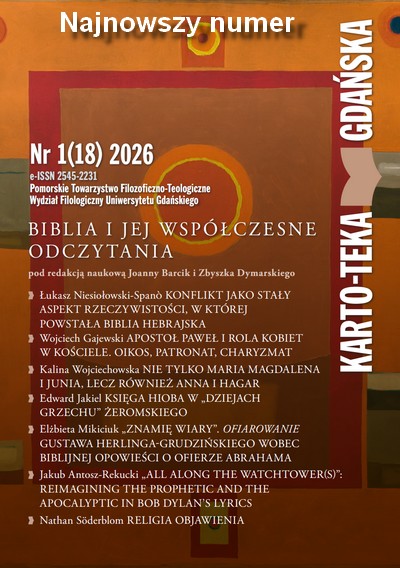
The Apostle Paul and the Role of Women in the Church: Oikos, Patronage, Charism
DOI:
https://doi.org/10.26881/kg.2026.1.02Keywords:
early Church, house church, patronage, Phoebe, Prisca, Junia, ekklesia, oikos, diakonos, prostatis, charismaAbstract
This article examines the role of women in the organization of the early Church, with particular attention to their participation in the functioning and formation of the earliest Christian communities. The point of departure is the tension between the social structures of the Jewish and Greco-Roman worlds and the novelty emerging from the theology and missionary practice of the milieu centered on Paul the Apostle. The analysis is based on selected New Testament texts and on findings from socio-historical research. Special attention is devoted to the relationship between the oikos as the basic unit of social organization, the mechanisms of patronage, and the charismatic practices present in Pauline communities. Within this framework, the figures of Phoebe (Rom 16:1-2), Prisca (Acts 18:26), and Junia (Rom 16:7) are discussed. The analysis indicates that women played a significant role in the life and organization of the earliest communities, although this participation underwent gradual transformation in the later development of the Church in connection with processes of institutionalization.
Downloads