Uniwersyteckie Czasopisma Naukowe
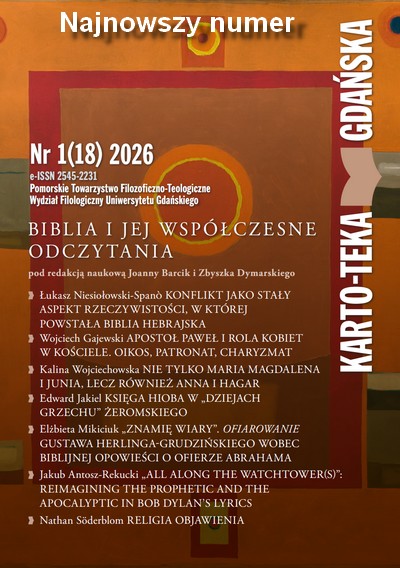
Nie tylko Maria Magdalena i Junia, lecz również Anna i Hagar. Biblijne ikony kontekstualnych hermeneutyk feministycznych
DOI:
https://doi.org/10.26881/kg.2026.1.03Słowa kluczowe:
hermeneutyka feministyczna, herstoria, Junia (Rz 16,7), teologia han, hanpuri, teologia womanistyczna, Hagar, Anna, teologie kontekstualneAbstrakt
Artykuł podejmuje zagadnienie współczesnych feministycznych hermeneutyk biblijnych w perspektywie postaci kobiecych, które w odróżnieniu od ugruntowanych ikon teologii feministycznej, jakimi są Maria Magdalena i Junia, stały się emblematyczne dla kontekstualnych teologii wyrosłych z doświadczenia wykluczenia, rasizmu i klasizmu. Po krótkim omówieniu filologiczno-historycznej kontrowersji wokół tożsamości Junii (Rz 16,7) w artykule przedstawiam trzy podstawowe nurty hermeneutyki feministycznej: hermeneutykę odzyskiwania, hermeneutykę podejrzeń oraz hermeneutykę utożsamiania. Zasadnicza część artykułu poświęcona jest dwóm kontekstualnym teologiom: koreańskiej teologii han, w której ikoną kobiecego cierpienia i przemiany (han pu ri) staje się Anna z Pierwszej Księgi Samuela, oraz afroamerykańskiej teologii womanistycznej, dla której ikoną przetrwania w strukturach potrójnego ucisku (rasowego, płciowego i klasowego) staje się Hagar z Księgi Rodzaju. Artykuł wskazuje, że te hermeneutyki kontekstualne, odczytujące tekst biblijny z perspektywy uciskanych, wnoszą istotny wkład w teologiczne rozumienie kobiecych postaci Pisma Świętego i otwierają istotne perspektywy dla teologii akademickiej.
Downloads