Uniwersyteckie Czasopisma Naukowe
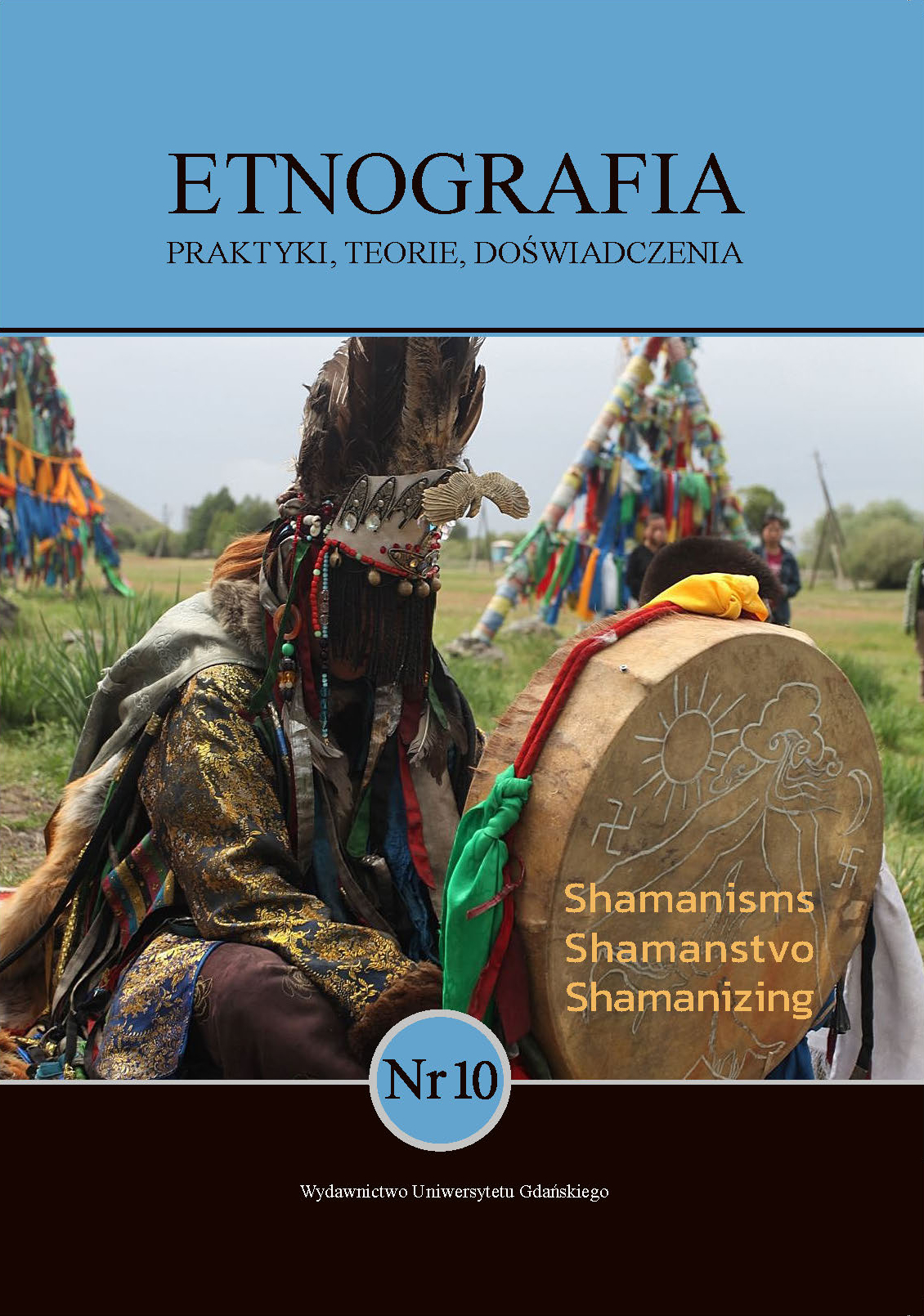
Shamanism among the indigenous cultures of North America: Selected aspects of archaeological traces
DOI:
https://doi.org/10.26881/etno.2024.10.10Słowa kluczowe:
Adena, Hopewell, Mississippian tradition, Barrier Canyon style, San Juan Basketmaker, Casas Grandes, Pueblo, shamanic burials, rock art, pottery iconographyAbstrakt
Certain forms of shamanism existed in many communities worldwide, including some of the indigenous cultures and tribes of North America, from the Arctic to the Gulf of Mexico and the desert areas of the Southwest, California, and northern Mexico. At least several American Indian and Inuit societies are known to have practised shamanism in both
pre-Columbian and other historical periods (even until very recent times). We can conclude this on the basis of various archaeological and ethnographic sources, including specific burials, interpreted as shamanic, as well as iconography of pottery and rock art imagery (paintings and petroglyphs) placed on rocks, boulders, and canyon walls, which offer
a profound insight into the beliefs of ancient societies. This article presents selected examples of archaeological evidence of shamanism in several cultures of the Eastern Woodlands and the Southwest of the pre-Columbian North America, with an emphasis on rock art depictions, and to some extent burials, the iconography of pottery, and other artefacts.
Downloads
Bibliografia
Bishop, K.J., Schwartz, Ch.W. (2024). Revisiting birds in the Southwest. Archaeology Southwest Magazine, 35(1–2).
Boyd, C.E. (2013). Rock Art of the Lower Pecos (Texas A&M University Anthropology Series, vol. 8). College Station: Texas A&M University Press.
Carr, Ch., Case, D.T. (eds.). (2006a). Gathering Hopewell: Society, ritual, and ritual interaction. New York: Springer Science+Business Media, Inc.
Carr, Ch., Case, D.T. (2006b). The nature of leadership in Ohio Hopewellian societies: Role segregation and the transformation from shamanism. In: Ch. Carr, T.D. Case (eds.),
Gathering Hopewell: Society, ritual, and ritual interaction (pp. 177–237). New York: Springer Science+Business Media, Inc.
Cole, S.J. (1990). Legacy on stone, rock art of the Colorado plateau and Four Corners region. Boulder: Johnson Books.
Cole, S.J. (1994). Roots of Anasazi and Pueblo imagery in Basketmaker II rock art and material culture. Kiva, 60(2), 289–311.
Cole, S.J. (2004). Origins, continuities, and meaning of Barrier Canyon style rock art. In:R.T. Matheny (ed.), New dimensions in rock art studies (Occasional Paper Series no. 9, pp. 7–78), Provo: Museum of Peoples and Cultures – Brigham Young University.Cordell,
L. (1997). Archaeology of the Southwest. 2nd ed. San Diego: Academic Press. Crown, P.L., Fish, S.K. (1996). Gender and status in the Hohokam pre-classic to classic transition. American Anthropologist, 98, 803–817.
Dongoske, K.E., Yeatts, M., Anyon, R., Ferguson, T.J. (1997). Archaeological cultures and cultural affiliation: Hopi and Zuni perspectives in the American Southwest. American Antiquity, 62(4), 600–608.
Eliade, M. (1964). Shamanism: Archaic techniques of ecstasy. Translated by W.R. Trask. Princeton: Princeton University Press.
Fagan, B.M. (2002). Ancient North America: The archaeology of a continent. Thames & Hudson. Fiedel, S. (1992). Prehistory of Americas. Cambridge – New York – Oakleigh: Cambridge University Press.
Firek, I. (2024). Ikonografia Kultu Południowego i motyw wojny w kulturze Missisipi. Unpublished Master’s thesis. Institute of Archaeology, Jagiellonian University in Kraków.
Fish, P.R., Fish, S.K. (2007). The Hohokam millennium. Santa Fe: School for Advanced Research Press.
Fowler, M.L. (1991). Mound 72 and early Mississippian at Cahokia. In: J.B. Stoltman (ed.), New perspectives on Cahokia, views from the periphery (pp. 1–28). Madison: Prehistory Press. Fowler, M.L. (1997). The Cahokia atlas: A historical atlas of Cahokia archaeology. Springfield – Urbana: Illinois Transportation – University of Illinois at Urbana Champaign.
Gąssowski, J. (1996). Indianie Ameryki Północnej od początków po wiek XIX. Warszawa – Puł-tusk: Wydawnictwo Trio – Wyższa Szkoła Humanistyczna im. Aleksandra Gieysztora w Pułtusku.
Gibson, J.L., Carr, P.J. (2004). Signs of power: The rise of cultural complexity in the Southeast. Tuscaloosa: University Alabama Press.
Harner, M. (1980). The way of the shaman: A guide to power and healing. San Francisco: Harper & Row.
Jagoda, K. (2016). Pochówki szamańskie z terenu Ameryki Północnej. Wybrane przykłady. Unpub-lished Bachelor’s thesis. Institute of Archaeology, Jagiellonian University in Kraków.
Jenkinson, R. (2019). A close look at the gallery. In: K. Hedges, A. McConnell (eds.), American Indian rock art (vol. 54, pp. 161–172). Tuscon: American Rock Art Research Association.
Jurkiewicz, K. (2019). Inwentarz grobowy kultury Adena. Unpublished Bachelor’s thesis.Institute of Archaeology, Jagiellonian University in Kraków.
Keyser, J.D., Whitley, D.S. (2006). Sympathetic magic in Western North American rock art. American Antiquity, 71(1), 3–26.
King, A. (ed.). (2007). Southeastern ceremonial complex: Chronology, content, contest. Tuscaloosa: University of Alabama Press.
Kitchell, J.A. (2010). Basketmaker and archaic rock art of the Colorado plateau: A reinter-pretation of paleoimagery. American Antiquity, 75(4), 819–840.
Lepper, B.T. (2004). Ohio archeology: An illustrated chronicle of Ohio ancient American Indian cultures. Wilmington: Orange Frazer Press.
Lewis-Williams, J.D., Dowson, T.A. (1988). The signs of all times: Entoptic phenomena in upper palaeolithic art. Current Anthropology, 29(2), 201–244.
Lewis-Williams, J.D., Dowson, T.A. (1989). Images of power: Understanding Bushman rock art. Johannesburg: Southern Books.
Lewis-Williams, J.D., Dowson, T.A. (1990). Through the veil: San paintings and the rock face. South African Archaeological Bulletin, 45(151), 5–16.
Malakoff, D. (2024). Polish archaeologists discover Colorado petroglyphs site theorized to be the heart of an Ancestral Pueblo community. American Archaeology, 28(1), 10.
Markiewicz, J. (2015). Geneza, rozprzestrzenienie i znaczenie motywu człowieka-ptaka w Kulcie Południowym Tradycji Missisipi. Unpublished Master’s thesis. Institute of Archaeology, Jagiellonian University in Kraków.
Mason, R.J. (2000). Archaeology and native North American oral traditions. American Antiquity, 65(2), 239–266.
Milner, G.R. (2005). The Moundbuilders: Ancient peoples of Eastern North America. London: Thames & Hudson.
Mitchell, D.R. (2003). Burial and society. In: D.R. Abbott (ed.), Centuries of decline during the Hohokam classic period at Pueblo Grande (pp. 107–127). Tucson: University of Arizona Press.
Nawrot, J. (2013). Funkcje i znaczenie ziemnej architektury na Wschodnim Obszarze Leśnym podczas wczesnego i środkowego okresu leśnego. Indigena. Przeszłość i Współczesność Tubylczych Kultur Amerykańskich, 3, 63–70.
Nawrot, J. (2014). Przedstawienia zwierząt w kulturach Adena i Hopewell. Funkcja i symbolika przedstawień religijnych. In: J. Jędrysik (ed.), Nasi mniejsi bracia czy środek przetrwania? Znaczenie zwierząt w dziejach ludzkości (pp. 136–151). Kraków: Koło Naukowe Studentów Archeologii UJ.
Palonka, R. (2004). Struktura społeczna w Tradycji Missisipi na podstawie źródeł archeologicznych i przekazów pisanych. Unpublished Master’s thesis. Institute of Archaeology, Jagiellonian University in Kraków.
Palonka, R. (2019a). Sztuka i archeologia kultur indiańskich prekolumbijskiego Południowego Zachodu USA. Kraków: Wydawnictwo Uniwersytetu Jagiellońskiego.
Palonka, R. (2019b). Rock art from the Lower Sand Canyon in the Mesa Verde Region, Southwestern Colorado, USA. Kiva, 85(3), 232–256.
Palonka, R. (2021). Investigations of Ancestral Pueblo rock art in the Lower Sand Canyon area of Canyons of the Ancients National Monument, Colorado. In: D.A. Kaiser,
M. Greer, J.D. Keyser (eds.), American Indian rock art (vol. 47, pp. 105–121). American Rock Art Research Association and Sunbelt Publications.
Palonka, R. (2022). Art in the pre-Hispanic Southwest: An archaeology of Native American cultures. Lanham: Lexington Books, Rowman & Littlefield.
Palonka, R. (2024). Exploring an Ancestral Pueblo community. Current World Archaeology, 124, 10–11.
Palonka, R., Ciomek K. (2024). New findings about Castle Rock community’s rock imagery. Archaeology Southwest Magazine, 37(1), 45.
Palonka, R., Ciomek, K., Schaafsma, P., Zych, B. (2025). Nowe odkrycia i interpretacje sztuki naskalnej przedhiszpańskiej kultury Pueblo w Lower Sand Canyon Locality, Canyons of the Ancients National Monument, Kolorado. Referaty z XXX Seminarium Polsko-Amerykańskiego Towarzystwa Etnograficznego im. Bronisława Malinowskiego PAES/ PATE. Warszawa.
Pauketat, T.R. (2004). Ancient Cahokia and the Mississippians. Cambridge: Cambridge Uni-versity Press.
Powell, M.S. (ed.). (2006). Secrets of Casas Grandes: Precolumbian art and archaeology of Northern Mexico. Santa Fe: Museum of New Mexico Press.
Romain, W.F. (2009). Shamans of the lost world: A cognitive approach to the prehistoric religion of the Ohio Hopewell. Lanham – Boulder – New York – Toronto – Plymouth: AltaMira Press.
Rozwadowski, A. (2009). Obrazy z przeszłości. Hermeneutyka sztuki naskalnej. Poznań: Wydawnictwo Uniwersytetu im. Adama Mickiewicza.
Rozwadowski, A. (2017). Travelling through the rock to the otherworld: The shamanic “grammar of mind” within the rock art of Siberia. Cambridge Archaeological Journal, 27(3), 413–432.
Rozwadowski, A., Wołoszyn, J.Z. (2024). Dances with Zigzags in Toro Muerto, Peru: Geometric petroglyphs as (possible) embodiments of songs. Cambridge Archaeological Journal, 34(4), 671–691.
Schaafsma, P. (1971). The rock art of Utah. Salt Lake City: University of Utah Press.
Schaafsma, P. (1980). Indian rock art of the Southwest. Santa Fe – Albuquerque: School of American Research – University of New Mexico Press.
Schaafsma, P. (1990). Shamans’ gallery: A Grand Canyon rock art site. Kiva, 55(3), 213–234. Schaafsma, P. (1994). Trance and transformation in the canyons: Shamanism and early rock art on the Colorado plateau. In: S.A. Turpin (ed.), Shamanism and rock art in North America (pp. 45–71). San Antonio: Rock Art Foundation, Inc.
Schaafsma, P. (2013). Images and power: Rock art and ethics. New York – Heidelberg – Dor-drecht – London: Springer.
Schwartz, Ch.W., Plog, S., Gilman, P.A. (eds.). 2022. Birds of the sun: Macaws and people in the US Southwest and Mexican Northwest. Tucson: University of Arizona Press.
Solomon, A. (2017). Rock arts, shamans, and grand theories. In: B. David, I.J. McNiven (eds.), The Oxford handbook of the archaeology and anthropology of rock art (pp. 565–585). New York: Oxford University Press.
Squire, E.G. Davis, E.H. (1998). Ancient monuments of the Mississippi Valley. Washington: Smithsonian Institution Press.
Szyjewski, A. (2016). Etnologia religii. Kraków: Zakład Wydawniczy NOMOS.
Turpin, S.A. (1990). Rock art and hunter-gatherer archaeology: A case study from SW Texas and Northern Mexico. Journal of Field Archaeology, 17(3), 263–281.
VanPool, Ch.S. (2003). The shaman-priests of the Casas Grandes region, Chihuahua, Mexico. American Antiquity, 68(4), 696–717.
Whitley, D.S. (1994). Shamanism, natural modeling, and the rock art of Far Western North American hunter-gatherers. In: S.A. Turpin (ed.) Shamanism and rock art in North America (pp. 1–44). San Antonio: Rock Art Foundation, Inc.
Whitley, D.S. (1998). Cognitive neuroscience, shamanism and the rock art of Native California. Anthropology of Consciousness, 9(1), 22–37.
Whitley, D.S. (2023). Ethnography, shamanism, and Far Western North American rock art. Boletín del Museo Chileno de arte precolombino, 28(1), 275–229.
Opublikowane
Jak cytować
Numer
Dział
Licencja
Czasopismo wydawane jest na licencji Creative Commons Uznanie autorstwa-Na tych samych warunkach 4.0 Międzynarodowe.