Uniwersyteckie Czasopisma Naukowe
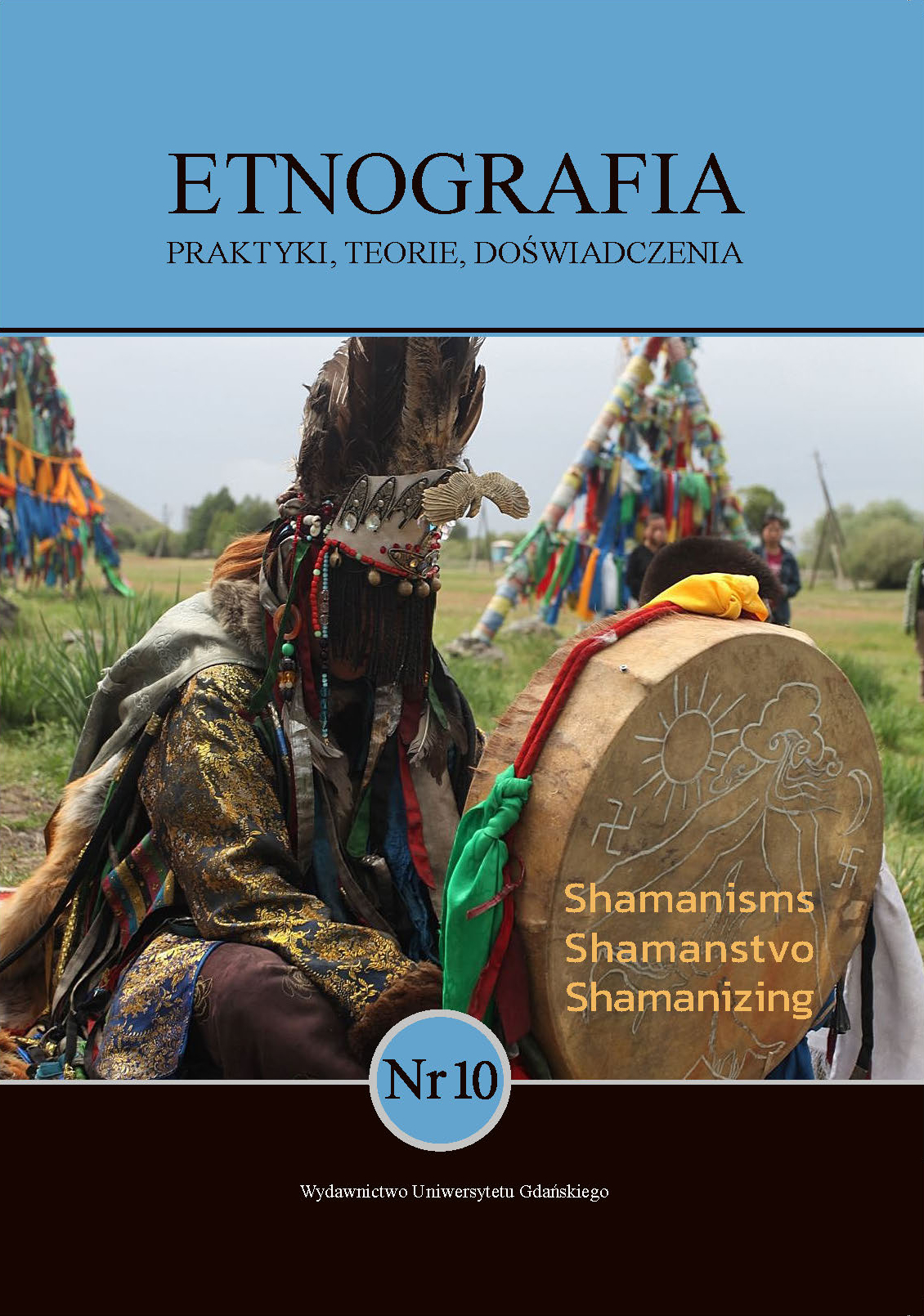
Shamans, plants, and spirits: Health and disease in the Plantocene
DOI:
https://doi.org/10.26881/etno.2024.10.11Słowa kluczowe:
plant agency, psychedelic healing, biopiracy, cultural appropriation, Plantocene, shamanism, interspecies communicationAbstrakt
This paper explores the experiences and perspectives of people from Poland who engage with psychoactive plants, referred to by me as the Plants, such as ayahuasca, psilocybin mushrooms, and mescaline-containing cacti-for healing and personal growth. Based on fourteen in-depth interviews and analysis of online discussions, the paper examines how my interlocutors conceptualize health, disease, and healing through their encounters with the Plants. The research highlights the shift from conventional biomedical paradigms to holistic, plant-centered approaches in which the Plants are seen as agentive beings capable of communicating with humans. The concept of the “Plantocene” is introduced as a speculative framework, suggesting that plant agency influences human behavior and planetary futures. The paper considers the ethical concerns that arise from attributing ultimate agency to the Plants, and from appropriating plants as “Slavic” or “global.” Such narratives legitimize “drawing” from the Plants and indigenous communities without acknowledging their rights, and may silence and deepen existing global inequalities.
Downloads
Bibliografia
AM. (2011). Ayahuasca manifesto: The spirit of ayahuasca and its planetary mission. doorofperception.com/wp-content/uploads/Ayahuasca-Manifesto_Anonymous_May-1st-2012.pdf [access: 1.07.2025].
Atkinson, J.M. (1992). Shamanisms today. Annual Review of Anthropology, 21, 307–330.
Awaken with JP. (2017). facebook.com/awakenwithjp/videos/if-trump-drank-ayahuasca-ultra-spiritual-life-episode-56/1712115202137668 [access: 1.07.2025].
Ayahuasca. (n.d.). ayahuasca.net.pl/o-ayi.html [access: 1.07.2025].
Bubandt, N. (2018). Anthropocene uncanny: Nonsecular approaches to environmental change. In: N. Bubandt (ed.), A non-secular Anthropocene: Spirits, specters and other nonhumans in a time of environmental change (pp. 2–18). AURA Working Papers, vol. 3.
Callicott, C. (2013). Interspecies communication in the Western Amazon: Music as a form of conversation between the Plants and people. European Journal of Ecopsychology, 4(1), 32–43.
Callicott, C. (2016). Introduction to the Special Issue: Ayahuasca, plant‐based spirituality, and the future of Amazonia. Anthropology of Consciousness, 27(2), 113–120.
Cappo, S.M. (2018). What ayahuasca wants: Notes for the study and preservation of an entangled ayahuasca. In: B.C. Labate, C. Cavnar (eds.), The expanding world ayahuasca diaspora (pp. 157–176). New York: Routledge.
Cardeña, E., Winkelman, M.J. (eds.). (2011). Altering consciousness: Multidisciplinary perspectives, 2 vols. Santa Barbara: Praeger.
Centro Munay. (n.d.). centromunay.com [access: 1.07.2025].
Chakrabarty, D. (2009). The climate of history: Four theses. Critical inquiry, 35(2), 197–222.
Daly, L., Shepard, G. Jr. (2019). Magic darts and messenger molecules: Toward a phytoethnography of indigenous Amazonia. Anthropology Today, 35(2), 13–17.
Davis, E. (2012). Ayahuasca and James Cameron’s Avatar. MAPS Bulletin. Special Edition: Psychodelics and Popular Arts, 22(1), 12–13.
Devenot, N., Conner, T., Doyle, R. (2022). Dark side of the shroom: Erasing indigenous and counterculture wisdoms with psychedelic capitalism, and the open source alternative: A manifesto for psychonauts. Anthropology of Consciousness, 33(2), 476–505.
Doyle, R. (2012). Healing with plant intelligence: A report from ayahuasca. Anthropology of Consciousness, 23(1), 28–43.
Espinoza, Y. (2015). Sexual healing with Amazonian plant teachers: A heuristic inquiry of women's spiritual-erotic awakenings. In: G. Ogden (ed.), Extraordinary sex therapy: Creative approaches for clinicians (pp. 109–120). Oxon – New York: Routledge.
Gearin, A. (2017). Good mother nature: Ayahuasca neoshamanism as cultural critique in Australia. In: B.C. Labate, C. Cavnar, A. Gearin (eds.), The world ayahuasca diaspora: Reinventions and controversies. Oxon: Routledge.
Gearin, A.K., Sáez, O.C. (2021). Altered vision: Ayahuasca shamanism and sensory individualism. Current Anthropology, 62(2), 138–163.
Goldstein, R. (2019). Ethnobotanies of refusal: Methodologies in respecting plant (ed)‐human resistance. Anthropology Today, 35(2), 18–22.
Harms, A. (2021). Accidental environmentalism: Nature and cultivated affect in European neoshamanic ayahuasca consumption. Anthropology of consciousness, 32(1), 55-80.
Hofmann, A. (2013). LSD and the divine scientist: the final thoughts and reflections of Albert Hofmann. Rochester, NY: Inner Traditions.
Hsu, E. (2010). Introduction. Plants in medical practice and common sense: On the interface of ethnobotany and medical anthropology. In: E. Hsu, S. Harris (eds.), Plants, health and healing: On the interface of ethnobotany and medical anthropology (pp. 1–48). New York – Oxford: Berghahn Books.
Hrešanová, E. (2023). Comrades and spies: From socialist scholarship to claims of colonial innocence in the Czech Republic. American Ethnologist, 50(3), 419–430.
Ingold, T. (2021). The perception of the environment: Essays on livelihood, dwelling and skill. London: Routledge.
Fotiou, E. (2012). Working with “la Medicina”: Elements of healing in contemporary ayahuasca rituals. Anthropology of Consciousness, 23(1), 6–27.
Fotiou, E. (2016). The globalization of ayahuasca shamanism and the erasure of indigenous shamanism. Anthropology of Consciousness, 27(2), 151–179.
Kallis, G. (2011). In defence of degrowth. Ecological Economics, 70(5), 873–880.
Kennedy, C. (2020). The emergent Plantocene: Weedy vegetal agency, radical embodiment, and ruderalism X Action(ism). Medium. christopherleekennedy.medium.com/the-emergent-plantocene-ff394a3bbfbb [access: 1.07.2025].
Kettner, H., Gandy, S., Haijen, E.C., Carhart-Harris, R.L. (2019). From egoism to ecoism: Psychedelics increase nature relatedness in a state-mediated and context-dependent manner. International Journal of Environmental Research and Public Health, 16(24), 5147.
Labate, B.C. (2014). The internationalization of Peruvian vegetalismo. In: B.C. Labate, C. Cavnar (eds.), Ayahuasca shamanism in the Amazon and beyond (pp. 182–205). Oxford: Oxford University Press.
Labate, B.C., Antunes, H.F., Beachy, J., Sloshower, J., Cavnar, C. (2025). Navigating the mainstreaming of psychedelics. Journal of Psychedelic Studies, 9(2), 108–115.
Labate, B.C., Cavnar, C. (eds.). (2014). The therapeutic use of ayahuasca. Heidelberg: Springer.
Labate, B.C., Cavnar, C. (eds.). (2018a). Plant medicines, healing and psychedelic science: Cultural perspectives. Cham: Springer.
Labate, B.C., Cavnar, C. (eds.). (2018b). The expanding world ayahuasca diaspora: Appropriation, integration and legislation. New York: Routledge.
Labate, B.C., Goldstein, I. (2009). Ayahuasca: From dangerous drug to national heritage: An interview with Antonio A. Arantes. International Journal of Transpersonal Studies, 28(1), 53–64.
Lewis, S.E. (2008). Ayahuasca and spiritual crisis: Liminality as space for personal growth. Anthropology of Consciousness, 19(2), 109–133.
Manifesto 123. (n.d.). facebook.com/Manifesto123 [access: 1.07.2025].
Marder, M. (2013). Plant intelligence and attention. Plant Signaling & Behavior, 8(5), e23902.
McKenna, D.J. (2007). The healing vine: Ayahuasca as medicine in the 21st century. In: M.J. Winkelman, T.B. Roberts (eds.), Psychedelic medicine: New evidence for hallucinogenic substances as treatments (pp. 21–44). Westport: Praeger Publishers.
Mitchell, T. (2011). Carbon democracy: Political power in the age of oil. London: Verso.
Myers, N. (2017) From the Anthropocene to the Planthroposcene: Designing gardens for plant/people involution. History and Anthropology, 28(3), 297–301.
Narby, J. (1999). The cosmic serpent: DNA and the origins of knowledge. London: Orion Books.
Neicun, J., Steenhuizen, M., van Kessel, R., Yang, J. C., Negri, A., Czabanowska, K., ... & Roman-Urrestarazu, A. (2019). Mapping novel psychoactive substances policy in the EU: The case of Portugal, the Netherlands, Czech Republic, Poland, the United Kingdom and Sweden. PloS one, 14(6), e0218011.
Neurotek. (n.d.). neurotek.wixsite.com/ayahuasca-manifesto/bio [access: 1.07.2025].
Nilsson, M., Stålhammar, S. (2024). Psychedelics and inner dimensions of sustainability: A literature review. European Journal of Ecopsychology, 9, 4–47.
Pace, B.A., Devenot, N. (2021). Right-wing psychedelia: Case studies in cultural plasticity and political pluripotency. Frontiers in Psychology, 12, 733185.
Simonienko, K., Waszkiewicz, N., Szulc, A. (2013). Psychoactive plant species: Actual list of the plants prohibited in Poland. Psychiatria Polska, 47(3), 499–510.
Taussig, M.T. (1989) The nervous system: Homesickness and Dada. Stanford Humanities Review, 1(1), 44–81.
Tsing, A. (2010). Arts of inclusion, or how to love a mushroom. Manoa, 22(2), 191–203.
Tupper, K.W. (2008). The globalization of ayahuasca: Harm reduction or benefit maximization?. International Journal of Drug Policy, 19(4), 297–303.
Tupper, K.W. (2009a). Ayahuasca healing beyond the Amazon: The globalization of a traditional indigenous entheogenic practice. Global Networks, 9(1), 117–136.
Tupper, K.W. (2009b). Entheogenic healing: The spiritual effects and therapeutic potential of ceremonial ayahuasca use. In: J.H. Ellens (ed.), The Healing Power of Spirituality: How Religion Helps Humans Thrive (vol. 3, pp. 269–282). Santa Barbara: Praeger.
Van de Port, M., & Mol, A. (2015). Chupar frutas in Salvador da Bahia: a case of practice‐specific alterities. Journal of the Royal Anthropological Institute, 21(1), 165-180.
Vunduk, J., Biketova, A.Y. (2022). The cultural use of mushrooms. In: D. Stojković, L. Barros (eds.), Edible fungi: Chemical composition, nutrition and health effects (vol. 36, pp. 327–358). London: Royal Society of Chemistry.
Winkelman, M.J. (2010). Shamanism: A biopsychosocial paradigm of consciousness and healing. Santa Barbara: Praeger.
Winkelman, M.J. (2011). A paradigm for understanding altered consciousness: The integrative mode of consciousness. Altering Consciousness: Multidisciplinary Perspectives, 1, 23–44.
Winkelman, M.J. (2014a). Therapeutic applications of ayahuasca and other sacred medicines. In: B.C. Labate, C. Cavnar (eds.), The therapeutic use of ayahuasca (pp. 1–21). Heidelberg: Springer.
Winkelman, M. (2014b). Psychedelics as medicines for substance abuse rehabilitation: Evaluating treatments with LSD, peyote, ibogaine and ayahuasca. Current Drug Abuse Reviews, 7(2), 101–116.
Opublikowane
Jak cytować
Numer
Dział
Licencja
Czasopismo wydawane jest na licencji Creative Commons Uznanie autorstwa-Na tych samych warunkach 4.0 Międzynarodowe.