Uniwersyteckie Czasopisma Naukowe
Kilka uwag o wartości bursztynu dla ludzkości dawniej i dziś
DOI:
https://doi.org/10.26881/porta.2024.23.12Słowa kluczowe:
Bursztyn, rozkwit ludzkości, Afryka, ludzie zniewoleni, pochówkiAbstrakt
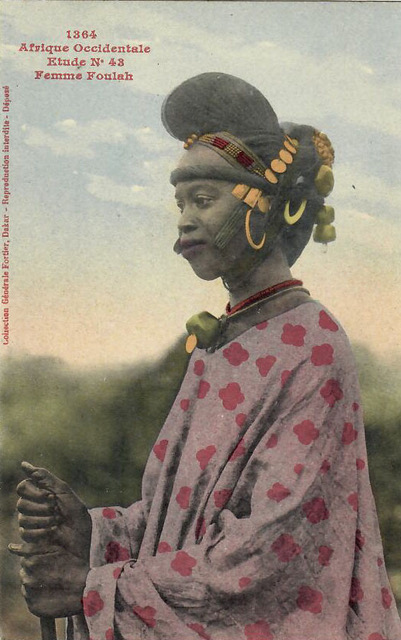
Niniejszy artykuł podsumowuje dwa obszary ostatnich badań autorki dotyczących wartości oraz różnych zastosowań bursztynu na przestrzeni wieków – od neolitu po czasy współczesne – i ich przenikanie się w toku badań. W ramach projektu “University of Pennsylvania Human Flourishing” bursztyn został przeanalizowany pod względem jego pozyskiwania, podejścia artystycznego, produkcji, zastosowań i sposobów dzielenia się nim, w tym eksponowania go na ciele oraz wystaw – prywatnych i publicznych. W kontekście wykorzystania bursztynu w Afryce i przez afrykańską diasporę skupiono się na dwóch ostatnich znaleziskach archeologicznych z historycznego cmentarza w Nowym Jorku (na którym chowano zarówno ludzi wolnych, jak i pozbawionych wolności) oraz z zamkniętego dawnego nabrzeża Rio di Janeiro Valongo Wharf, związanego z transatlantyckim handlem niewolnikami. Analiza obejmuje trwający od tysiącleci handel i wyzyskiwanie Afryki, jak również afrykańskiej diaspory.
Downloads
Bibliografia
Alpern Stanley F., What Africans Got for Their Slaves: A Master List of European Trade Goods, “History in Africa” 1995, vol. 22, pp. 5–43.
Araujo Ana Lucia, Public Memory of Slavery: Victims and Perpetrators in the South Atlantic, New York 2010.
Araujo Ana Lucia, Shadows of the Slave Past: Memory, Heritage, and Slavery, New York 2014.
Araujo Ana Lucia, Brazil and Slavery: African Heritage and Memories of Slavery in Brazil and the South Atlantic World, Amherst 2015.
Araujo Ana Lucia, Sites of Disembarkation and the Public Memory of the Atlantic Slave Trade [in:] A Stain on Our Pasts: Slavery and Memory, eds. Abdoulaye Gueye, Johann Michel Trenton, New Jersey 2018, pp. 137–169.
Araujo Ana Lucia, Museums and Atlantic Slavery, London 2021.
Araujo Ana Lucia, Reparations for Slavery and the Slave Trade: A Transnational and Comparative History, 2nd ed., London 2024.
Bianco Barbara A., Christopher R. DeCorse, Jean Howson, Beads and Other Adornment [in:] The New York African Burial Ground Reports, vol. 2, pt. 1, chapter 13, eds. Warren R. Perry, Jean Howson, Barbara A. Bianco, Washington, D.C. 2009, pp. 335–336, 340–342, https://www.gsa.gov/about-us/regions/welcome-to-the - -northeast-caribbean-region-2/about-region-2/african-burial-ground/introduction - -to-african-burial-ground-final-reports [accessed: 27.11.2024].
Canot Theodore, Captain Canot; or Twenty Years of an African Slaver. Being an Account of His Career and Adventures on the Coast, in the Interior, on Shipboard, and in the West Indies, ed. Brantz Mayer, New York 1854.
Causey Faya, Amber and the Ancient World, The J. Paul Getty Museum, Los Angeles 2012.
Causey Faya, Amber and Africa [in:] Amber. Science and art. Amberif International symposium, Abstracts, eds. Ewa Wagner-Wysiecka, Jacek Szwedo, Anna Sobecka, Janusz Czebreszuk, Mateusz Cwaliński, Gdańsk 2018, pp. 143–144.
Causey Faya with technical analysis by Jeffrey Maish, Herant Khanjian, Michael Schilling. Ancient Carved Ambers in the J. Paul Getty Museum, Los Angeles 2019.
Causey Faya, Amber, Africa, and the African Diaspora [in:] Motion: Migrations. Proceedings of the 35th World Congress of Art History, ed. Claudia Mattos Avolese, online 2023, pp. 340–355, http://www.ciha.org/sites/default/files/files/V4_Motion_%20 Migrations_35%20World%20Congress_CIHA_full%20volume_compressed.pdf [accessed: 27.11.2024].
Causey Faya, Amber: The Magic Rubs Off [in:] Visual Arts and Human Flourishing (The Humanities and Human Flourishing), ed. Selma Holo, Oxford 2024, pp. 117–130.
Debret Jean-Baptiste, Voyage Pittoresque et Historique au Bresil ou Sejour d’un Artiste Francais au Bresil depuis 1815 jusqu’en 1831, 3 vols, Paris 1834–1839.
Hood Sinclair Amber in Egypt [in:] Amber in Archaeology: Proceedings of the Second Annual Conference on Amber in Archaeology, eds. Curt W. Beck, Jan Bouzek, Liblice 1990, pp. 230–235.
King Rachel, Amber From Antiquity to Eternity, London 2022, pp. 151–155.
La Roche Cheryl J., Blakey Michael L., Seizing Intellectual Power: The Dialogue at the New York African Burial Ground, “Historical Archaeology” 1997, vol. 31, no. 3, pp. 84–106, https://www.jstor.org/stable/i25616540.
Lima Tania Andrade, A la recherche du Valongo: le quai des esclaves à Rio di Janeiro, XIXième siècle [in:] Archéologie de l’esclavage colonial, eds. André Delpuech, Jean - -Paul Jacob, Paris 2014.
Lima Tania Andrade, Marcos André Torres de Souza, Glaucia Malerba Sene, Weaving the Second Skin: Protection Against Evil Among the Valongo Slaves in Nineteenth - -century Rio de Janeiro, “Journal of the African Diaspora Archaeology & Heritage” 2014, vol. 3, no. 2, pp. 103–136.
Lima Tania Andrade, Valongo, An Uncomfortable Legacy, “Current Anthropology” 2020, vol. 61, no. Suppl. 22, pp. 317–327.
Lima Tania Andrade, Por una Arqueología Decolonial de las Ciudades, “Urbania: Revista Latinoamericana de Arqueología e Historia de las Ciudades” 2023, no. 12, pp. 1–11.
Lima Tania Andrade, Práticas Espirituais Esquecidas: Memória para a Resistência das Religiões Afro -brasileiras, “Vestígios: Revista Latino-Americana de Arqueologia Histórica” 2023, vol. 17, no. 2, pp. 125–150.
Mack Mark E., Blakey Michael L., The New York African Burial Ground Project: Past Biases, Current Dilemmas, and Future Research Opportunities, “Historical Archaeology” 2004, vol. 38, no. 1, pp. 10–17.
Opper Marie-José, Opper Howard, Diakhité: A Study of the Beads from an 18th–19th Century Burial Site in Senegal, West Africa. Beads, “Journal of the Society of Bead Researchers” 1989, vol. 1, pp. 5–20.
Souty Jérome, Les lavages du quai des esclaves du Valongo, “Cahiers d’Études Africaines” 2018, vol. 58, Cahier 229(1), pp. 25–68.
Walvin James, Slavery in Small Things: Slavery and Modern Cultural Habits, Chichester UK 2017.