Uniwersyteckie Czasopisma Naukowe
Das Valenzmodell und die Existenzialkonstruktionen. Eine Untersuchung zu den polnischen Entsprechungen der es gibt‑Sätze im Deutschen
DOI:
https://doi.org/10.26881/sgg.2018.39.10Słowa kluczowe:
Dependezielle Verbgrammatik, Existenzialkonstruktionen, Deutsch‑Polnische‑Syntax, Informationsstruktur, Unakkusative Verben, Kongruenz, FunktionssubjektAbstrakt
Im Artikel werden polnische Existenzialkonstruktionen untersucht, die den deutschen es gibt‑Sätzen entsprechen. In Betracht werden folgende Schwerpunkte gezogen: die syntaktische Funktion des Pronomens es in den existenzialen es gibt‑Sätzen, die syntaktische Bestimmung der NP in den polnischen Entsprechungen, die satzfinale Position der verfügbaren NP bei der existentialen Lesart in der Informationsstruktur sowie die Kongruenzmarkierungen in den Verneinungsformen der es gibt‑Entsprechungen im Polnischen. Es wird überlegt, welche Möglichkeiten für die Erklärung das DVG‑Modell anbietet und durch welche andere Vorschläge es ergänzt werden kann.
Downloads
Download data is not yet available.
Pobrania
Opublikowane
2018-12-20
Jak cytować
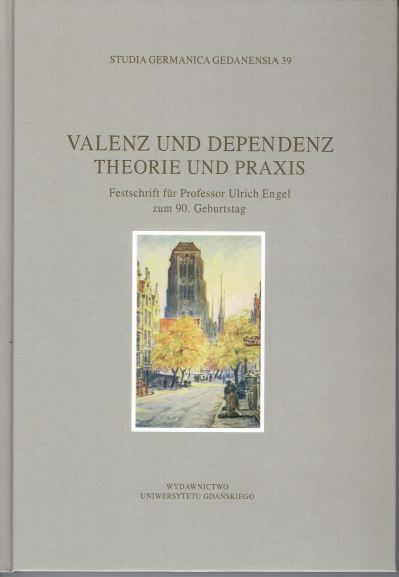
Pilarski, A. (2018). Das Valenzmodell und die Existenzialkonstruktionen. Eine Untersuchung zu den polnischen Entsprechungen der es gibt‑Sätze im Deutschen. Studia Germanica Gedanensia, (39), 134–147. https://doi.org/10.26881/sgg.2018.39.10
Numer
Dział
Artykuły
Licencja
Copyright by Instytut Filologii Germańskiej, Wydawnictwo Uniwersytetu Gdańskiego.