Academic Scientific Journals
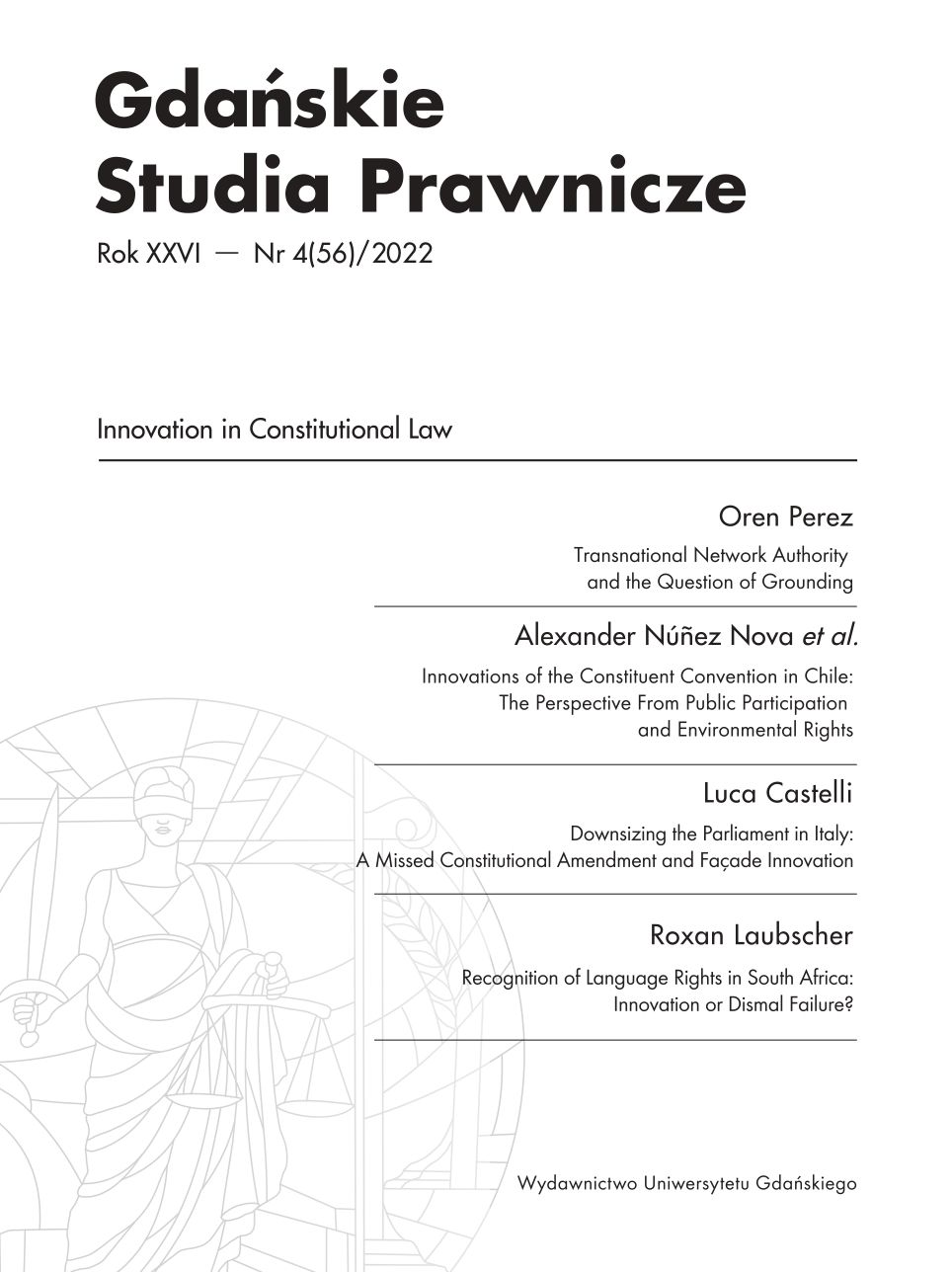
Recognition of Language Rights in South Africa: Innovation or Dismal Failure?
DOI:
https://doi.org/10.26881/gsp.2022.4.05Keywords:
language rights, official languages, language discrimination, translation of legislation, languages in higher educationAbstract
One of the main goals of the Constitution of the Republic of South Africa, 1996 is to bring about transformation within South African society. The new Constitution recognised no less than eleven languages as official languages, including various previously neglected indigenous languages. Where only two languages were previously recognised as official languages under the apartheid regime, this was replaced with a range of languages. However, South African government bodies do not always follow the Constitution’s language obligations; public higher education institutions have nearly all eliminated tuition in languages other than English; and legislation is rarely (if ever) issued in other official languages. The present paper shows how the recognition and use of languages in South Africa differs significantly in theory and in practice. The paper highlights this disparity by first laying out South Africa’s constitutional and legislative framework for official language recognition and use with regard to two issues, namely translation of legislation and the use of languages in higher education. Second, the paper looks at various rulings from South African courts that shows how official languages are used in practice and how language issues have been resolved by the courts. Third, the paper concludes that, rather than becoming a beacon of innovation, the South African Constitution’s language provisions have become a terrible failure. Finally, the paper offers several suggestions for dealing with this sad predicament.
Downloads
References
Laubscher R., “Overview of constitutional court judgments on the bill of rights – 2021”, Tydskrif vir die Suid-Afrikaanse Reg (TSAR)/Journal of South African Law 2022.
Laubscher R., “Overview of the constitutional court judgments on the bill of rights – 2019”, Tyd-skrif vir die Suid-Afrikaanse Reg (TSAR)/Journal of South African Law 2020.
Malan K., “Observations and suggestions on the use of official languages in national legislation”, SAPR/L 2008.
Malan K., “The discretionary nature of the official language clause of the constitution”, SAPR/L 2011.
Mureinik E., “A bridge to where? Introducing the interim bill of rights”, South African Journal on Human Rights 1994.
Rautenbach I.M., Venter R., Rautenbach-Malherbe Constitutional Law, LexisNexis Durban 2018.
Venter R., “Are some official languages more equal than others? Reflections on constitutional duties toward official languages, the Use of Official Languages Act and respecting diversity”, Tydskrif vir die Suid-Afrikaanse Reg (TSAR)/Journal of South African Law 2015.
Venter R., “Official Languages and Higher Education: The Story of an African University”, Tydskrif vir die Suid-Afrikaanse Reg (TSAR)/Journal of South African Law 2019.